African pandemic clinical research initiative launched in Uganda
3 min readBy Christopher Bendana
Kampala
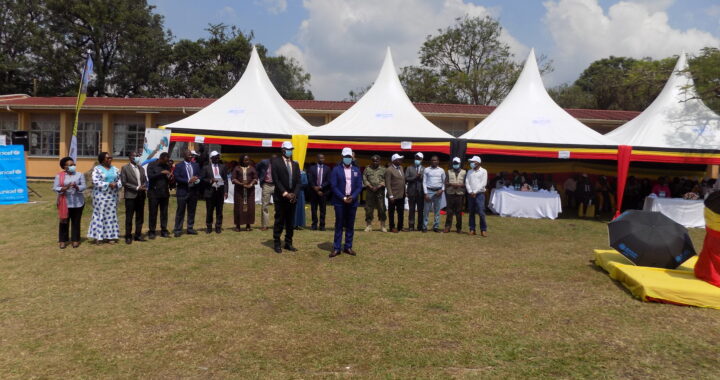
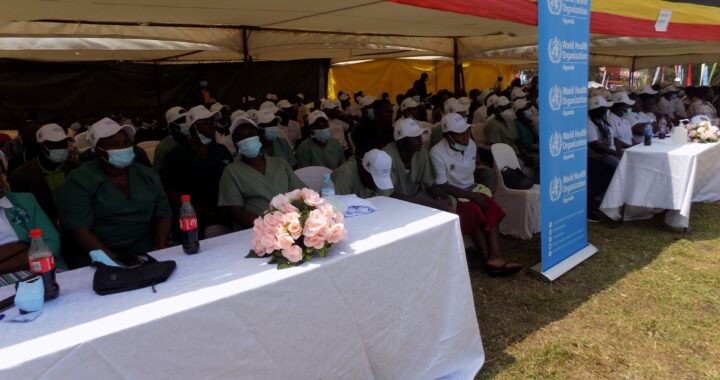
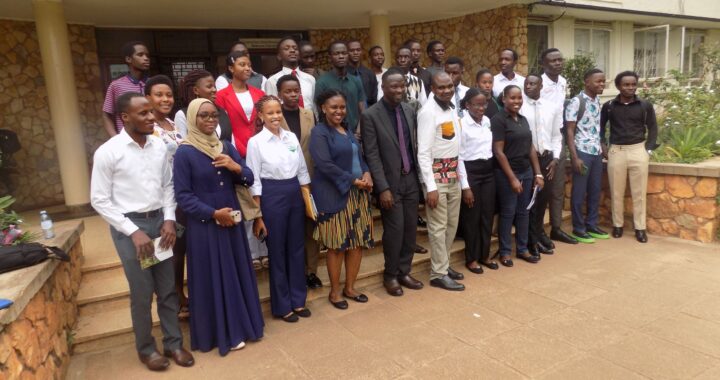
A continental initiative to tackle global pandemics was launched on 28 September at Makerere University School of Public Health (MakSPH) in Kampala, Uganda.
The initiative, Advancing Clinical Trial and Epidemic Preparedness Research Capacity in Africa (ACT-PREP), is a consortium of several research institutes in Europe and Africa. It intends to strengthen Africa’s ability to rapidly conduct high quality clinical research during health emergencies.
Africa, especially the East African region, is a hotbed of viruses and pandemics. The region is currently battling Ebola in the DRC and has recently been affected by Marburg and Mpox. The vaccines in use and those under clinical trials are developed by European and American scientists. African scientists and policymakers say this is too risky, learning from the COVID-19 experience when Africa was left on its own while Europe and North America vaccinated their people.
Rhoda Wanyenze, dean of MakSPH and principal investigator for the project, said the initiative answers the challenges experienced during COVID-19, when Africa depended on Europe and America for data and information on the disease.
“The data we were using was generated from Europe and Asia. The evidence did not represent us,” she told those present and many online during the launch.
Bruce Kirenga, head of the Lung Institute at Makerere University College of Health Sciences in Kampala, another partner organization warned that the current research funding landscape is unsuitable during outbreaks because solutions are needed immediately.
“It is not geared for outbreaks,” he said during a panel discussion. “By the time calls are issued, proposals are reviewed and funds are released, an outbreak may already be well underway.”
Kirenga, who also leads key clinical trials for drugs and medicines developed by local innovators, called for classified outbreak funding, as is done for military intelligence.
Michelle Nderu, project officer at EDCTP, speaking by video link, said pandemic preparedness is not something countries can achieve in isolation, as pandemics do not respect national boundaries.
Billy Ngasala, a researcher at Muhimbili University of Health and Allied Sciences in Dar es Salaam, Tanzania said that African governments need to increase budgetary funding for research to at least 2% of their national budgets to address local societal challenges.
Like other African scientists, Ngasala said his university depended heavily on foreign partners, which is unsustainable.
“For now, we follow the money,” he said.
The institutes in the initiative include 10 African research institutes and two European institutes: Makerere University in Uganda; Muhimbili University of Health and Allied Sciences in Tanzania; University of Juba in South Sudan; Université Cheikh Anta Diop de Dakar in Senegal; Université de Kinshasa in the DRC; and the University of Global Health Equity in Rwanda. The European institutes are Karolinska Institutet in Sweden and the Bernhard Nocht Institute for Tropical Medicine in Germany. The Africa CDC and the Lung Institute in Uganda are also involved.
Stefan Swartling Peterson, a professor of global health at Karolinska Institutet in Sweden who spends time at Makerere University, argues that the COVID-19 experience is a lesson for the world to manage pandemics together and not in isolation.
“We are forgetting very fast. Countries are putting national interests below global health,” he said on the sidelines of the launch.
ACT-PREP, supported by the European and Developing Countries Clinical Trials Partnership (EDCTP3), comes at a time when pandemic preparedness, a global concern was snubbed by the United States and Europe at the 2026 United Nations General Assembly.
Otherwise, the initiative intends to train 5,000 scientists in pandemic response, including 700 senior researchers, 15 PhD researchers and 10 postdoctoral researchers.
“By investing in people, institutions and systems, the initiative will contribute to stronger health security across Africa,” a statement from the workshop says.