Energy experts discuss clean energy adoption in Kampala
3 min read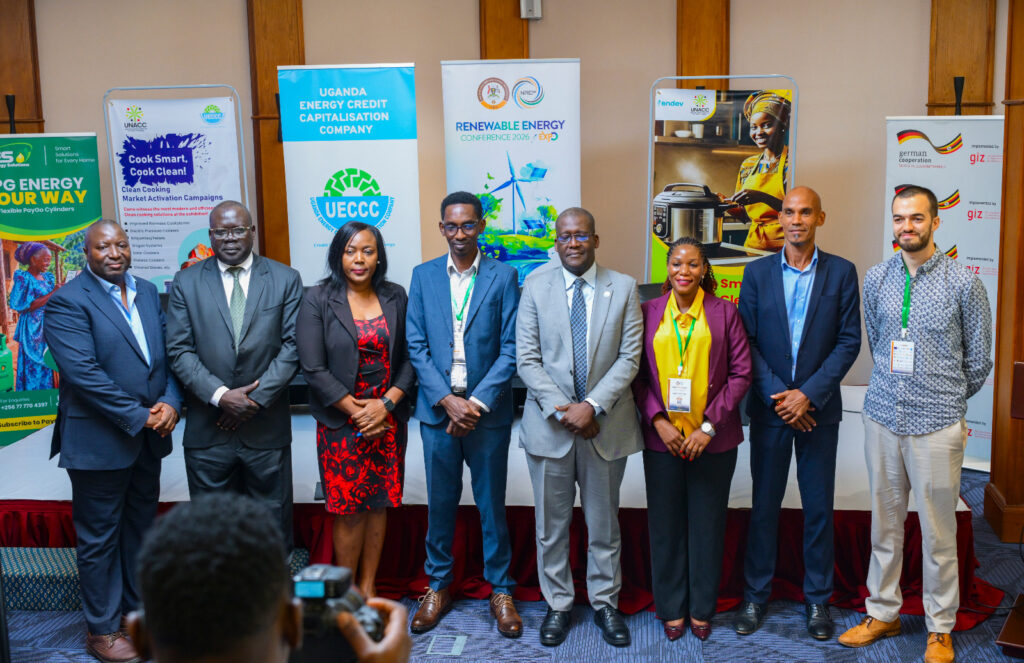
Sarah Birungi of the Alliance for Clean Cooking in Green blouse, Roy Baguma Namutale fourth from right, the MD, UECCC in a group photo after the session at Serena Hotel.
Energy experts discuss clean energy adoption
By Christopher Bendana,
Kampala
Energy experts from the private sector, development partners, implementing agencies, and industry associations spent much of 20 October planning how to scale up clean energy use across the country.
The interaction, organized by the Uganda National Alliance on Clean Cooking (UNACC) with support from the Uganda Energy Credit Capitalization Company (UECCC), discussed the role, achievements, challenges, design realities, and future sustainability of Results-Based Financing (RBF) in Uganda’s clean cooking sector.
RBF is a 2024-2027 clean energy subsidy programme managed by UECCC. . Solar lanterns are discounted by 60%; clean cooking equipment and fuels such as ethanol, biogas, and Liquefied Petroleum Gas (LPG) are discounted by between 30% and 50%; while productive-use energy equipment such as irrigation systems and grain-milling equipment are discounted by 60%.
Organisations represented included the German Development Agency (GIZ), the Foundation Dutch Volunteers (SNV), the Ministry of Energy and Mineral Development, and Wana Energy Solutions.
Roy Nyamutale Baguma, Managing Director of UECCC, argued for scaling up clean cooking technologies through a mix of pressure cookers, LPG, ethanol, and solar energy.
He emphasised that this should be done now, not tomorrow, because the current high dependence on biomass for cooking was affecting not only the country’s tree cover but also indoor air pollution.
“In Uganda, air pollution affects 20 million people,” he said.
He said UECCC had partnered with 35 financial institutions through which businesses in the energy transition could access finance and capital to make clean energy equipment affordable. He added that UECCC was exploring ways to reach households that cannot afford clean cooking technologies.
Wasirwa of Wana Energy Solutions, a company that sells clean energy equipment, said RBF had helped the company increase sales because of the subsidy, but it was now facing low sales as prices without the subsidy.
Acheles Karungi of GIZ said they had established clean cooking hubs under the clean cooking programme, specifically the higher-tier cooking component. There are about five pilot hubs across Uganda; in Lweza, Mukono in the central region, Jinja, Soroti in the East and Kabale in the Southwest. Their purpose is to bring products closer to customers.
Sarah Babirye, Project Manager at UNACC, highlighted that affordability is not the only issue; soft skills such as messaging also matter.
“Even when RBF stops, if people understand the importance and functionality of the pressure cooker, they will buy it. The RBF model is a pilot to show that EPCs work,” she argued. Once awareness has been created, ideally even if RBF stops tomorrow, someone who understands the role of clean cooking technology should go ahead and buy it.
She called on development partners to support the alliance intentionally in pushing market-activation drives so that people are aware of the technologies and willing to buy them even after the programme ends.
She also called on UECCC to support the alliance and its members in improving business development services and technical capacity so that they can produce quality, certified products and qualify for World Bank projects.
“Many are left out because they lack capacity,” she said.